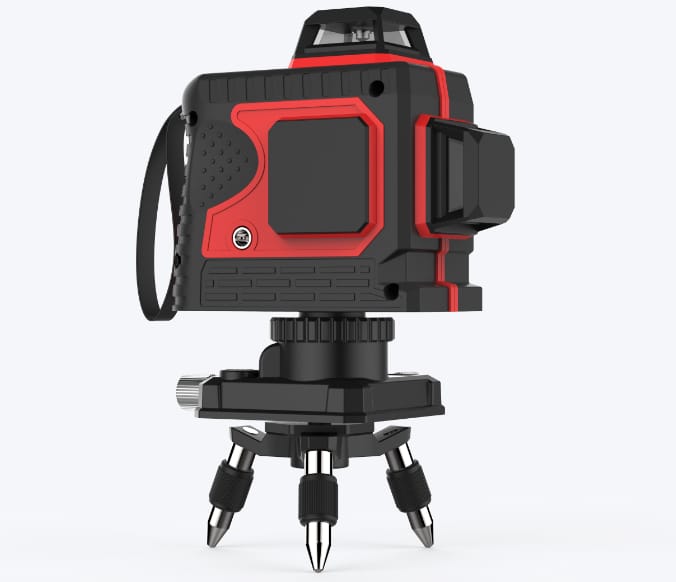
A laser level operates by directing a laser beam from a built-in laser unit into the telescope barrel, causing the beam to project along the line of sight (collimation axis). These instruments come in two varieties: dedicated laser levels and traditional levels fitted with an add-on laser unit. When used in conjunction with a leveling staff equipped with a photoelectric receiver target, they enable highly precise leveling measurements. They are widely used due to their high accuracy, long operating range, and capabilities for automated reading and data recording.
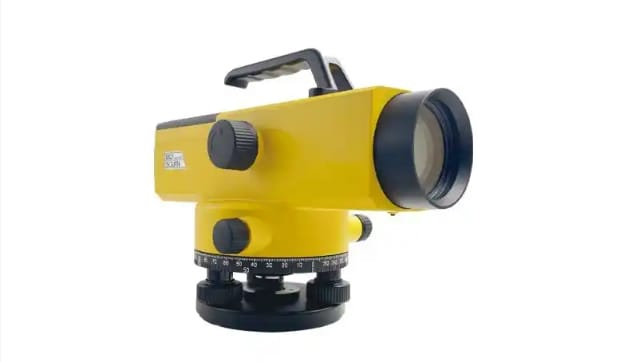
In contrast, the optical level is a traditional surveying tool composed primarily of basic components such as a telescope and either a tubular spirit level or a compensator. It is used for leveling tasks by adjusting the spirit level or compensator to ensure a horizontal line of sight, thereby measuring the elevation difference between two points. While optical levels offer the advantages of simple construction and lower cost, they fall short of laser levels in terms of accuracy and automation.
The primary differences between laser levels and optical levels lie in their accuracy and functionality. Laser levels deliver superior measurement precision, making them suitable for engineering projects and scientific research requiring high accuracy. Optical levels, meanwhile, are better suited for standard leveling tasks with less stringent accuracy requirements. Additionally, laser levels feature automated reading and recording capabilities, which significantly enhance operational efficiency.
Regarding price, laser levels are generally more expensive than optical levels. This is due to the use of advanced technologies—such as laser emission and reception systems, as well as automated reading and recording mechanisms—which entail higher costs. Conversely, the cost of optical levels is largely concentrated in the telescope and spirit level components, making them a more economical choice.
There are significant differences in construction and performance between laser levels and optical levels. The choice of instrument depends on specific application requirements and budget constraints. Laser levels are the superior choice for scenarios demanding high precision and automation, whereas optical levels offer a more cost-effective solution for standard leveling tasks with lower accuracy requirements.