Instruments used for measuring straight lines include: laser distance meters, tape measures, theodolites, total stations, and levels.
1. Laser distance meter: A modern measuring tool that uses laser technology to measure distance, capable of determining the length of a straight line with high precision. It is easy to operate; simply by aiming at the starting and ending points, one can quickly obtain distance data.
2. Tape measure: One of the most traditional measuring tools, commonly used for measuring lengths in daily life. It is operated manually by extending or pulling the tape to measure the length of a straight line. Although its precision is relatively low, the tape measure is a practical and economical choice for simple measurement tasks.
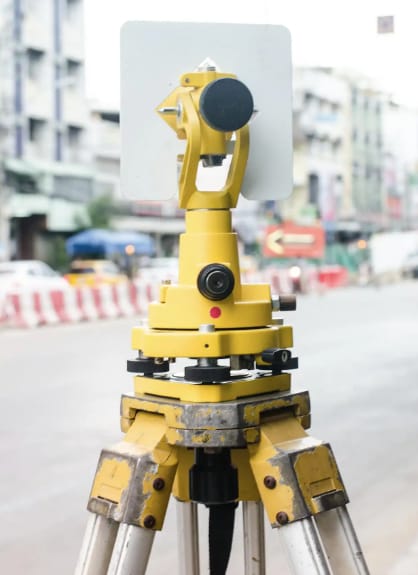
3. Theodolite: A precision instrument designed specifically for measuring angles and distances. It uses a built-in telescope and a leveling bubble mechanism to accurately measure the angles and distances of straight lines. Theodolites are indispensable tools in fields such as construction engineering and topographic surveying.
4. Total station: An advanced measuring instrument that integrates optical, electronic, and computer technologies. It can measure angles, distances, and elevations, and automatically calculate the coordinates of a straight line. Widely used in construction engineering and road design, total stations are characterized by high precision and efficiency.
5. Level: This instrument is primarily used to measure the difference in elevation between two points and distances along a horizontal plane. It utilizes a built-in leveling bubble and telescope to accurately measure horizontal distances and height differences. Levels play a crucial role in fields such as construction engineering and bridge building.
The instruments listed above are commonly used for measuring straight lines, each with its own characteristics and scope of application. The choice of instrument depends on specific measurement requirements and environmental conditions.