1. Definition and Applications of Laser Levels
A laser level is an instrument used to detect horizontality; it determines the position of a horizontal plane by emitting a laser beam. Typically consisting of a tripod, a laser emitter, and a receiver, it is widely used in fields such as construction, road engineering, and electrical installation.
In construction, laser levels are commonly used to establish the correct horizontal alignment of buildings, while in road engineering, they help determine road gradients and curvature. In electrical installation, they are used to align wiring horizontally and facilitate precise measurements.
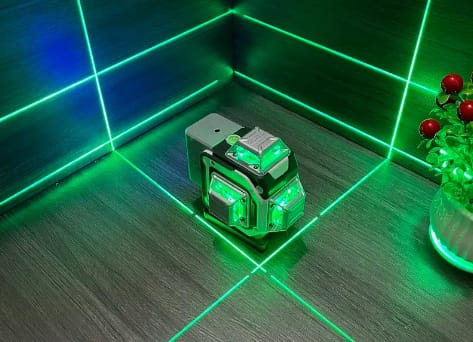
2. Operating Principles of Laser Levels
Laser levels operate by utilizing the properties of laser beams for measurement. First, the emitter projects a parallel laser beam, directing it onto an inclined reflective surface.
Upon striking the reflective surface, the beam is reflected into the receiver. The receiver detects the beam’s position and generates a signal, allowing the beam’s location to be determined based on that signal.
Another operating principle involves the comparison method. By placing two instruments at different locations and comparing the height difference between them, the horizontal position can be determined.
In summary, laser levels function by using laser beams to measure horizontal positioning, enabling the design and execution of construction and engineering projects based on the measurement results.